Your customer was always the business

TL;DR: Your customer reaching out at 11pm is not the end of your funnel. They are the business. In South Africa, where 96% of internet users live on WhatsApp, the gap between a question and an answer is where revenue quietly leaks away. A well-built AI agent, your best employee expressed in software, closes that gap by answering in the moment and handing off to a human when it counts.
It is 11pm. Somewhere out there, a customer is standing in your store.
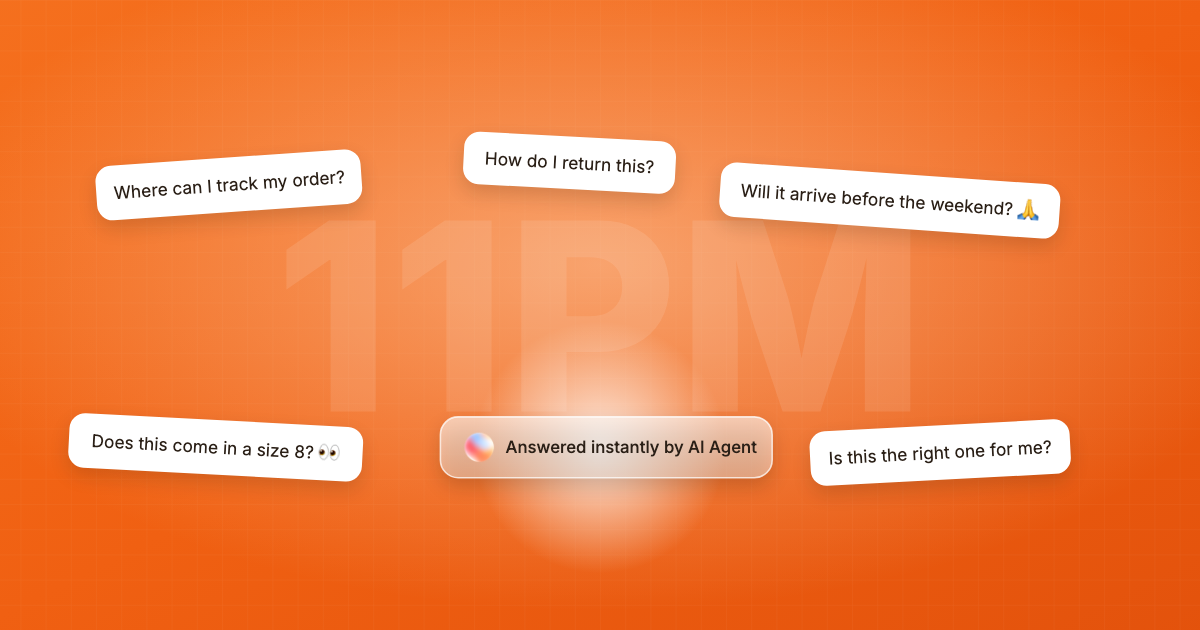
Not the one with the lights and the shelves and the polished floors. The one in their pocket or on their lap. They have a question, and it is a small one. Does this come in a size 8? Will it arrive before the weekend? Is this the right one for me? They type it out, they hit send, and then they do the one thing you cannot afford for them to do.
They wait…
Your team is asleep. Your office is dark. The message sits there, blinking, while the moment quietly cools. And after a minute, or five, or ten, the customer does the most natural thing in the world. They go and ask someone else.
That someone else answers. And a sale that was yours becomes a sale that was theirs, in a transaction you never saw and will never get the chance to win back.
1. In South Africa, that pocket is not a metaphor
It is worth pausing on why this matters more here than almost anywhere on earth.
96% of South African internet users are on WhatsApp. Not have it installed somewhere on the third page of their phone. Are on it, every day, all day. The average person here spends close to 24 hours a month inside the app, more than they give to Facebook or Instagram, and when you ask South Africans to name their single favourite app in the world, one in three of them say WhatsApp before anything else.
So WhatsApp is not a channel you might add. It is the room your customers are already standing in. It is the first thing they open in the morning and the last thing they close at night, the place where they talk to their mother, their best friend, and the person who sorts out everything for them.
And when they message a business in that same place, with that same ease, they are not filling in a contact form they had to go and hunt for. They are reaching for you the way they reach for someone they trust. It is intimate, it is instant, and it is the most honest test your brand will ever sit.
Most businesses fail it without ever knowing the test was set.
2. The thing we quietly got backwards
Somewhere along the way, we started treating the customer as the last step. The conversion. The line on the dashboard. The thing at the bottom of the funnel that either tips over or does not.
But the customer was never the last step. The customer was the whole point.
Not the website. Not the ad budget. Not the checkout flow you spent three months perfecting. The person on the other end of that 11pm message is the entire reason any of it exists, and the way you treat them in the seconds they reach for you says more about your brand than any campaign you will ever run.
For years, we left that moment to luck. We hoped someone would be online. We hoped the message would get seen before it got buried. We hoped, mostly, that the customer would be patient enough to wait until we were ready.
Hope is a lovely thing. It is a terrible strategy. And a customer is far too valuable to leave to a guess.
3. The numbers are not on your side. Yet.
Here is what the data says, plainly.
People do not merely prefer a fast reply. They have quietly redefined what counts as acceptable. HubSpot found that 90% of customers call a quick response critical when they have a question, and most of them now consider "quick" to mean ten minutes or less. That is the window. It is narrow, and it does not care that you are busy.
Now set your own reality beside it. Across the businesses we work with, 58% of customer messages arrive after 5pm and before 9am. Read that twice. More than half of every conversation a business has is happening in the hours when the building is empty and the team is asleep.
Put those two facts in the same room and the picture gets uncomfortable. Your customers expect an answer inside ten minutes, and most of them are asking at the exact time nobody is there to give one.
The cost of that gap is not theoretical, and it is not small. More than 50% of customers will move to a competitor after a single bad experience. Not a scandal. Not a disaster. One unanswered message, one night of silence, is enough.
4. You are not buying a bot. You are hiring one.
So you are stuck with a problem that looks impossible. You cannot clone your best salesperson. You cannot ask a human being to stay awake for the rest of their life. And you cannot keep pretending the after-hours window does not exist, because your customers have already voted with their thumbs.
This is where most people reach for the wrong word. They hear "AI agent" and they picture a bot. A clumsy script. A dead-end menu that loops you back to where you started.
Forget that. Picture the best person who has ever worked for you instead. Picture yourself.
The one who knew the catalogue cold. Who remembered the regular by name. Who could read the difference between a customer browsing and a customer ready to buy. Now imagine that person never sleeps, never has an off day, never forgets a face, and can hold a thousand of those conversations at once without dropping a single one. That is what a well-built agent actually is. Not a thing that replaces your people. A version of your best person that you train, refine, and sharpen every single day until it knows your business better than most of your team.
And the part that surprises the sceptics is this. Customers are happy to be helped this way. More than 82% consumers now say they are comfortable being served by an automated assistant, and the remaining percentage are open to it depending on the situation. The reason is not complicated. A good agent is faster than a tired human, steadier than a team on a bad day, and it has the whole product range in its head at all times.
The old fear was that people wanted to avoid machines. They never did. What people want to avoid is waiting. Give them a fast, accurate, human-sounding answer at the moment they need it, and they will not care that an agent sent it. They will only remember that someone did.
This was never humans versus machines. The setups people trust most are the ones where the agent takes the moment and a human takes over the instant something needs a human. Machine handles the repetitive. People handle the meaningful. Everyone does the work only they can do.
5. The layer between the ad and the sale
There is a stretch of every business that almost nobody is looking after.
It is not the ad that pulls the customer in. It is not the checkout that rings up the sale. It is the middle. The questions. The hesitation. The reassurance. The quiet, decisive "yes, this is the right one for you."
Call it the conversational layer. It is the ground where customers decide whether you are worth it, and for a decade it has been the most neglected real estate in commerce. Brands poured fortunes into the two ends. They split-tested the ad and they optimised the cart, and they left the bit in between to chance, assuming the customer would either figure it out alone or wait politely for morning.
They will do neither. The customer in the middle is not a loose thread to tidy up when you get a moment. The customer in the middle is the business.
This is the part the whole industry is finally waking up to. When the largest companies on earth start building always-on agents that live inside the messaging apps people already use, that is not a trend to be nervous about. It is a confirmation, spoken out loud, that the conversation was the product all along.
6. This is what we build
This is the category we are building at Flowapt.
FlowIQ is the all-in-one inbox that puts your customers exactly where they have always belonged. At the centre. It closes the gap between a question and an answer, turning your most expensive silence into your sharpest advantage. It lets you run your business, instead of your business running you.
Your customer was always the business.
It is time you ran it like you believe it.
Key Takeaways
- The customer is the business. Not the website, the ad spend, or the checkout. The person on the other end of the message is the entire reason any of it exists.
- The 11pm moment is the real test. 58% of customer messages land after 5pm and before 9am, and most customers now expect a reply within ten minutes.
- Silence costs revenue. More than half of customers walk to a competitor after a single bad experience. One unanswered message is a door opening to the business down the road.
- An agent is not a bot. Done right, it is your best employee in software: always on, always on brand, never forgetting a returning customer.
- Own the conversational layer. The part between the ad and the checkout is where customers decide whether you are worth it. FlowIQ turns that gap from a leak into a moat.
Frequently Asked Questions
- Why is WhatsApp so important for South African businesses?
- 96% of South African internet users are on WhatsApp, spending nearly 24 hours a month inside the app. It is where customers already are, which makes it the most honest test of whether your business is reachable in the moment.
- How fast do customers actually expect a reply?
- Fast. 90% of customers say a quick response is critical when they have a question, and most now consider ten minutes or less the limit. Miss that window and the moment is usually gone.
- Is an AI agent just a chatbot?
- No. A scripted bot deflects. A well-built agent is your best employee expressed in software: it knows your catalogue, carries your brand voice, answers in the moment, and hands off to a human the instant something needs a human touch.
- Will customers be annoyed at being helped by AI?
- Most are not. More than 82% of consumers now say they are comfortable being served by an automated assistant, and the rest are open to it depending on the situation. People want to avoid waiting far more than they want to avoid a machine.
- What is the conversational layer?
- It is the part of your business between the ad that brings a customer in and the checkout that takes their money. It is where customers decide whether you are worth it, and it is the layer almost no one owns.
- What does FlowIQ do?
- FlowIQ is an all-in-one inbox that puts your customers at the centre. It closes the gap between a question and an answer, turning it from a leak into a moat, so owners can run their business instead of their business running them.
Ready to put your customer at the centre?
FlowIQ answers the 11pm message in your brand's voice, then hands off to your team the moment it counts. See it work on your own conversations.
Get a free demo- Answer the 11pm customer
- On brand, every conversation
- Human handoff when it counts