15 updates before coffee
 Kiah Thandi SaaimanLast updated19 Aug 2026AI Agents5 min read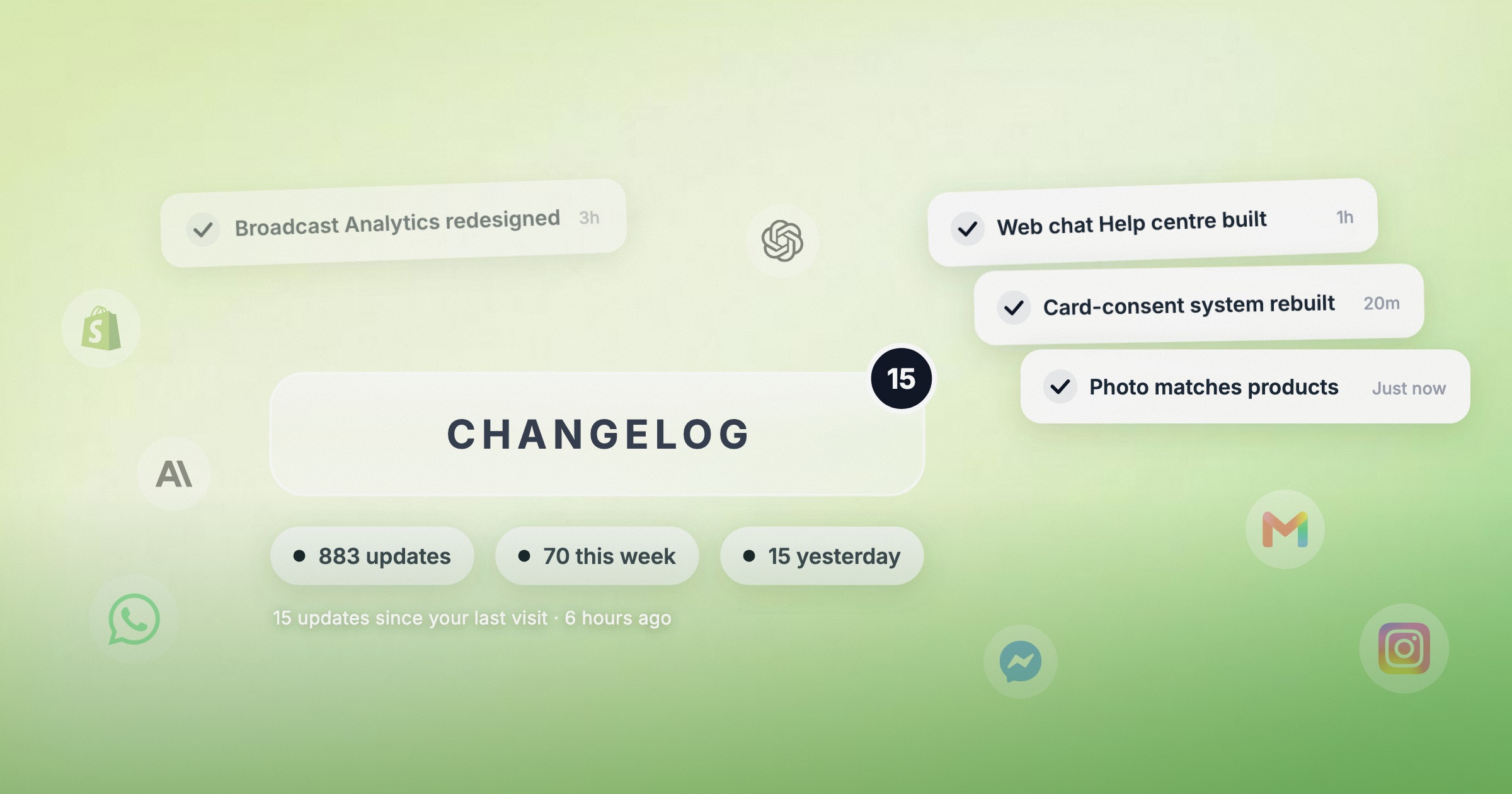
TL;DR: Working in tech right now feels like running a race where the finish line keeps moving. The tools change. AI gets smarter. Yesterday's impossible becomes today's product update. And somewhere in the middle of all that, we're building FlowIQ: shipping, learning, breaking, fixing and improving faster than we ever thought possible.
There is a strange feeling that comes with working in tech right now.
You are moving incredibly fast. And somehow, you still feel like you need to move faster.
A feature that felt groundbreaking six months ago can feel expected today. A problem that would have taken weeks to solve suddenly takes days. Sometimes hours.
You wake up to a new model. By lunch, someone has built something with it. By the end of the week, customers expect it inside the products they already use.
Then Monday comes. And we sprint again.
1. The finish line keeps moving
Most races have a fairly simple agreement. You start here. You finish there.
Tech has apparently decided that would be far too easy. The finish line moves every day.
AI is advancing at a pace that is genuinely difficult to explain unless you are working inside it. The tools we use are changing while we use them. The expectations around what software should be capable of are changing just as quickly.
Things that sounded futuristic a year ago are becoming checkboxes.
AI understanding a voice note? Expected. Recognising what is inside an image? Of course. Searching through thousands of products in seconds? Why wouldn't it? Remembering context across a conversation? It should.
The extraordinary becomes ordinary incredibly quickly. And that changes the way you build.
2. We don't really build in months anymore
One of the strangest parts of working on FlowIQ has been watching our own definition of "fast" change.
There was a time when shipping a major feature felt like an event. Plan it. Design it. Build it. Test it. Launch it. Celebrate. Move onto the next thing.
Now? Sometimes I open FlowIQ in the morning and something exists that did not exist yesterday.
A better way for an agent to handle a conversation. A new integration. A smarter workflow. A tiny improvement that removes three clicks. An entirely new capability.
Ship. Learn. Improve. Ship again.
The product almost feels alive.
3. And then there's the changelog
This is what my computer looks like most mornings when I open it.
883 updates. 70 this week. 15 yesterday.
And yes, sometimes I haven't even had coffee yet.
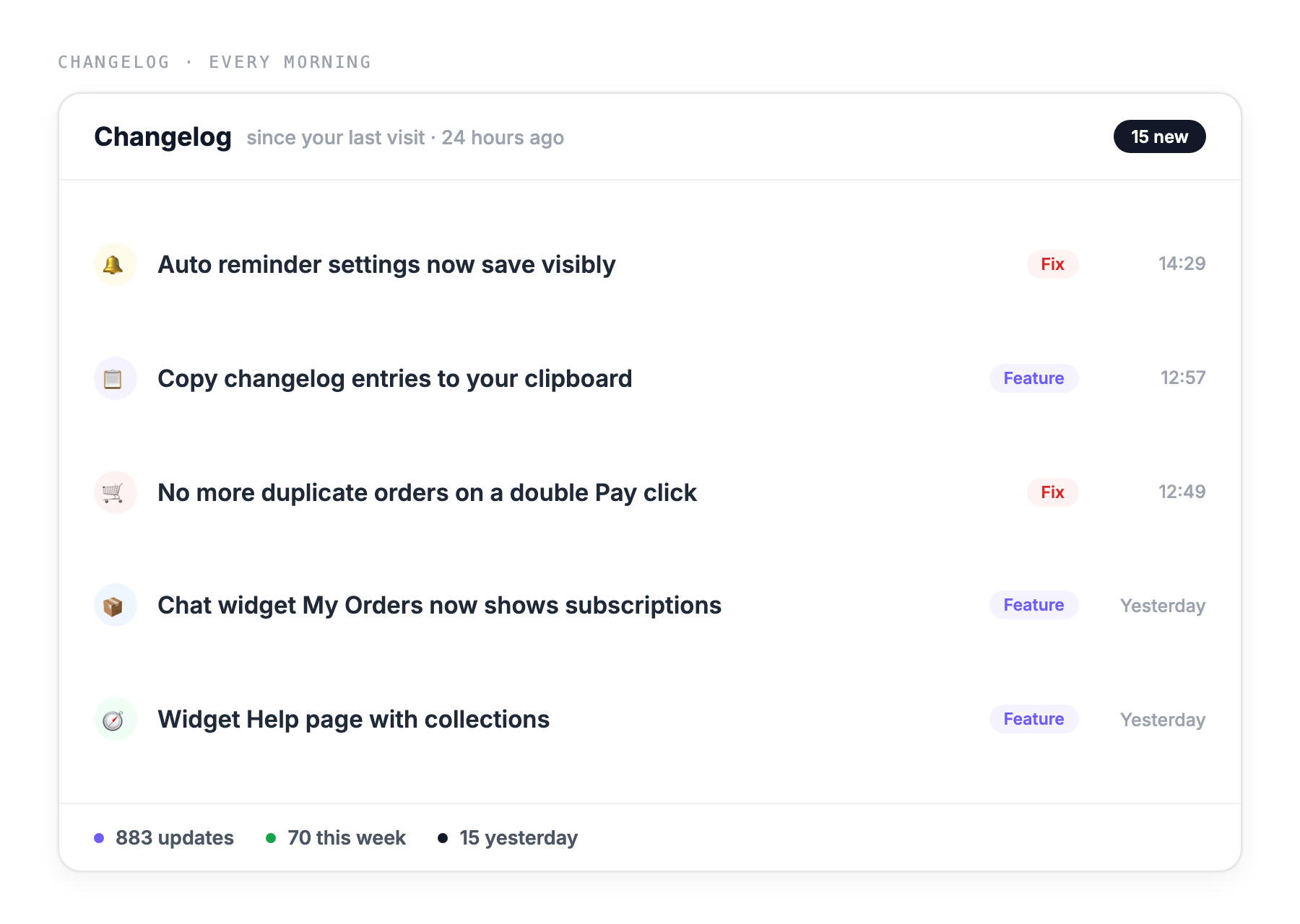
Our main developer and CEO, Matt, builds and ships at lightning speed. So fast, in fact, that we eventually had to build a changelog just so the rest of us could keep up.
Every morning, we can open FlowIQ and see exactly what landed while we were away. New features. Improvements. Fixes. UI changes. Agent updates. Infrastructure. Database changes. Sometimes something completely new.
It has basically become our morning newspaper. Except instead of waking up and reading about what happened in the world overnight, we're reading about what happened inside our own product.
And some mornings, the answer is: a lot.
There is something slightly surreal about scrolling through a list of things that didn't exist a few days, or sometimes a few hours, earlier.
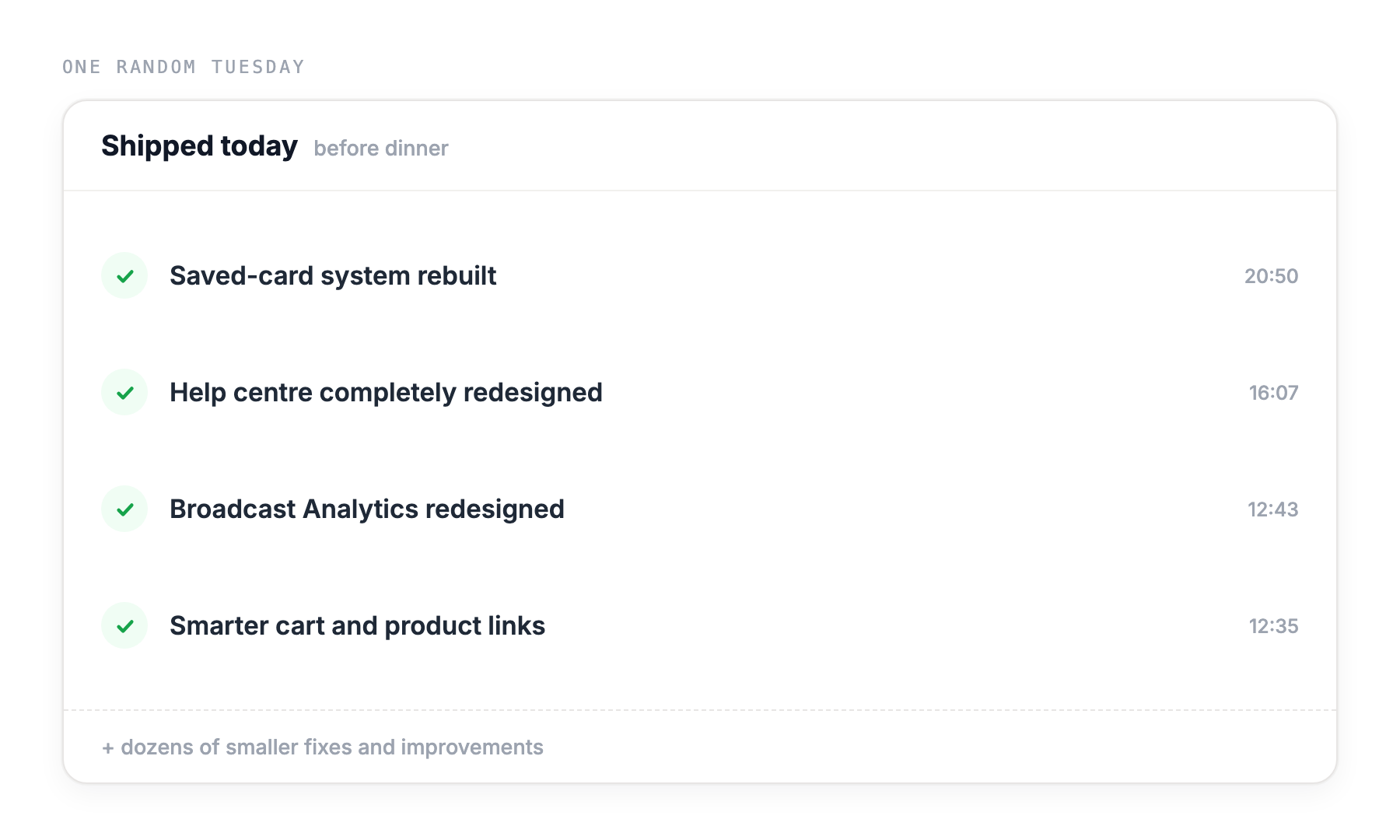
On one random Tuesday alone, we're looking at things like a saved-card system rebuilt. A completely redesigned Help centre. Broadcast Analytics redesigned. Smarter cart and product links. All sitting alongside dozens of smaller fixes and improvements.
Ship. Document it. Wake up. Catch up. Repeat.
The changelog wasn't really built as a marketing feature. We genuinely needed it. Because when your product is changing this quickly, "Wait, when did we add that?" becomes a surprisingly common sentence around the office.
And I think that little purple CHANGELOG button might be one of the best representations of what working in tech feels like right now. You are constantly catching up. Even when you're part of the team building it.
4. Yesterday's impossible list
This might be my favourite way of looking at how quickly everything is changing.
Make a list of things that would have sounded ridiculous a few years ago. Then look at what FlowIQ can already do today.
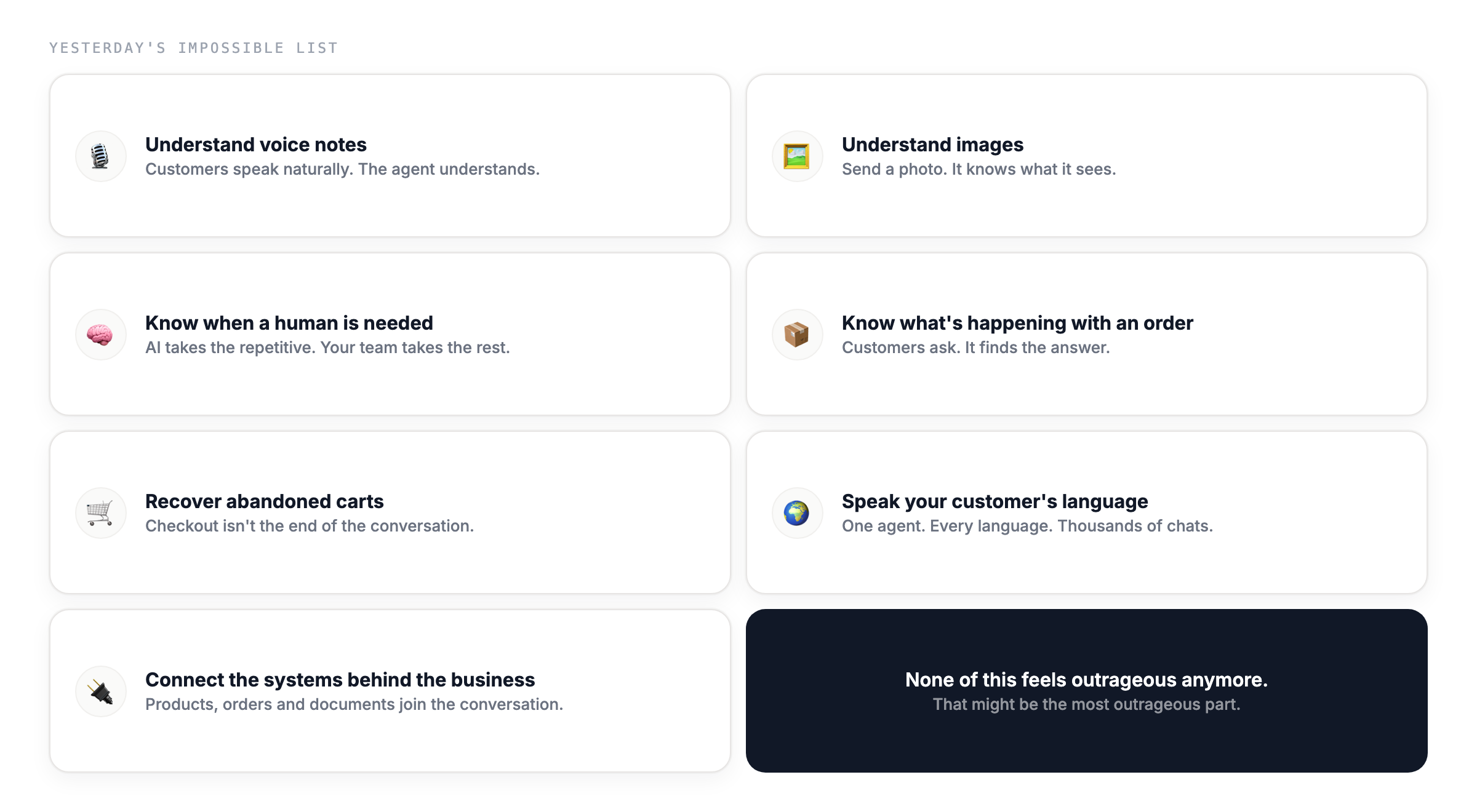
🎙️ Understand voice notes. Customers can speak naturally. The agent understands.
🖼️ Understand images. Send a photo. FlowIQ can recognise and respond to what it sees.
🧠 Know when a human is needed. AI handles the repetitive. Your team steps in when judgement or empathy matters.
📦 Know what is happening with an order. Customers ask. FlowIQ finds the answer.
🛒 Recover abandoned carts. The conversation does not have to end because someone left checkout.
🌍 Speak your customer's language. One agent. Multiple languages. Thousands of conversations.
🔌 Connect to the systems behind the business. Products, documents, orders and operational data become part of the conversation.
None of these things feel particularly outrageous anymore.
That might be the most outrageous part.
5. Small team. Very fast feedback loops
There is something addictive about building this way.
Someone has an idea. Someone else says, "Wait. Could we actually do that?" A conversation starts. A prototype appears.
We test it. We hate one part. We change it. Someone finds an edge case nobody thought about. We fix that too.
Then suddenly the thing we were casually talking about is sitting inside FlowIQ. Live.
And when you are a small team, those loops can happen ridiculously quickly. There are fewer layers between idea and execution. Less waiting. More building.
Which means sometimes the most exciting FlowIQ roadmap meeting is simply opening FlowIQ and seeing what changed since yesterday.
6. But speed isn't really the point
It is easy to romanticise speed in tech. Ship faster. Build faster. Move faster.
But shipping quickly means very little if you are just producing more noise.
The exciting part is not that we can release something every day. It is that every release can make the system a little more useful.
One less repetitive task for a team. One customer answered faster. One conversation that would have been missed. One salesperson who gets to focus on the customer who actually needs them. One business able to handle more conversations without immediately needing more people.
That is the part worth sprinting for.
Not features for the sake of features. Capability.
7. The weirdest part is knowing this is probably slow
Here is the thought I keep coming back to.
Right now feels unbelievably fast. Every week there is another announcement. Another model. Another capability. Another company changing what we thought software could do.
And yet, there is a very good chance that five years from now we will look back at 2026 and think: wow, things moved slowly back then.
That is difficult to wrap your head around. We might currently be living through one of the fastest periods of technological change we have ever experienced while simultaneously experiencing the slowest version of what comes next.
So no. I don't think there is a finish line.
I think we build. We learn. We ship. The technology changes. Customers change. The product gets better. And then we wake up tomorrow and do it again.
That is exhausting sometimes. It is chaotic. It is slightly ridiculous.
And it might be one of the most exciting races we will ever get to run.
8. Still building
FlowIQ today is not FlowIQ from six months ago. And FlowIQ six months from now will probably make today's version look small.
That's the point.
We aren't building towards a moment where we can finally say: "Done."
We're building a system that keeps learning, expanding and becoming more capable alongside the technology around it.
There is no finish line.
Good.
We're not done running.
Key Takeaways
- The finish line moves every day. AI is advancing so fast that things that sounded futuristic a year ago, voice notes, image recognition, memory across a conversation, are becoming checkboxes.
- We don't build in months anymore. Sometimes FlowIQ wakes up with features that did not exist the night before. Ship, learn, improve, ship again.
- The changelog is our morning newspaper. 883 updates and counting. We built it because 'Wait, when did we add that?' became a daily sentence around the office.
- Small teams have fast feedback loops. Fewer layers between idea and execution means the casual conversation on Monday is live in the product by Friday.
- Speed isn't the point. Capability is. A release only matters if it makes the system a little more useful: one customer answered faster, one conversation that would have been missed.
- This is probably the slow part. Five years from now, 2026 may look like the sluggish old days. There is no finish line, and that is the exciting part.
See where FlowIQ is today
FlowIQ today is not FlowIQ from six months ago. Get a free demo and see what it can already do, before tomorrow's version makes it look small.
Get a free demo- Answer the 11pm customer
- On brand, every conversation
- Human handoff when it counts