Silly season is coming. Don't shout.
 Kiah Thandi SaaimanLast updated16 Sep 2026WhatsApp6 min read
TL;DR: From Black Friday to Christmas, every brand shouts at the same time, into the same inboxes, at the same tired reader. Attention does not grow in December. The messages just multiply. The brands that win silly season are not the loudest ones. They are the ones standing in a quieter room, sending one message worth opening, and answering the reply at 11pm when the sale actually happens. And the list they message in November? They built it in September.
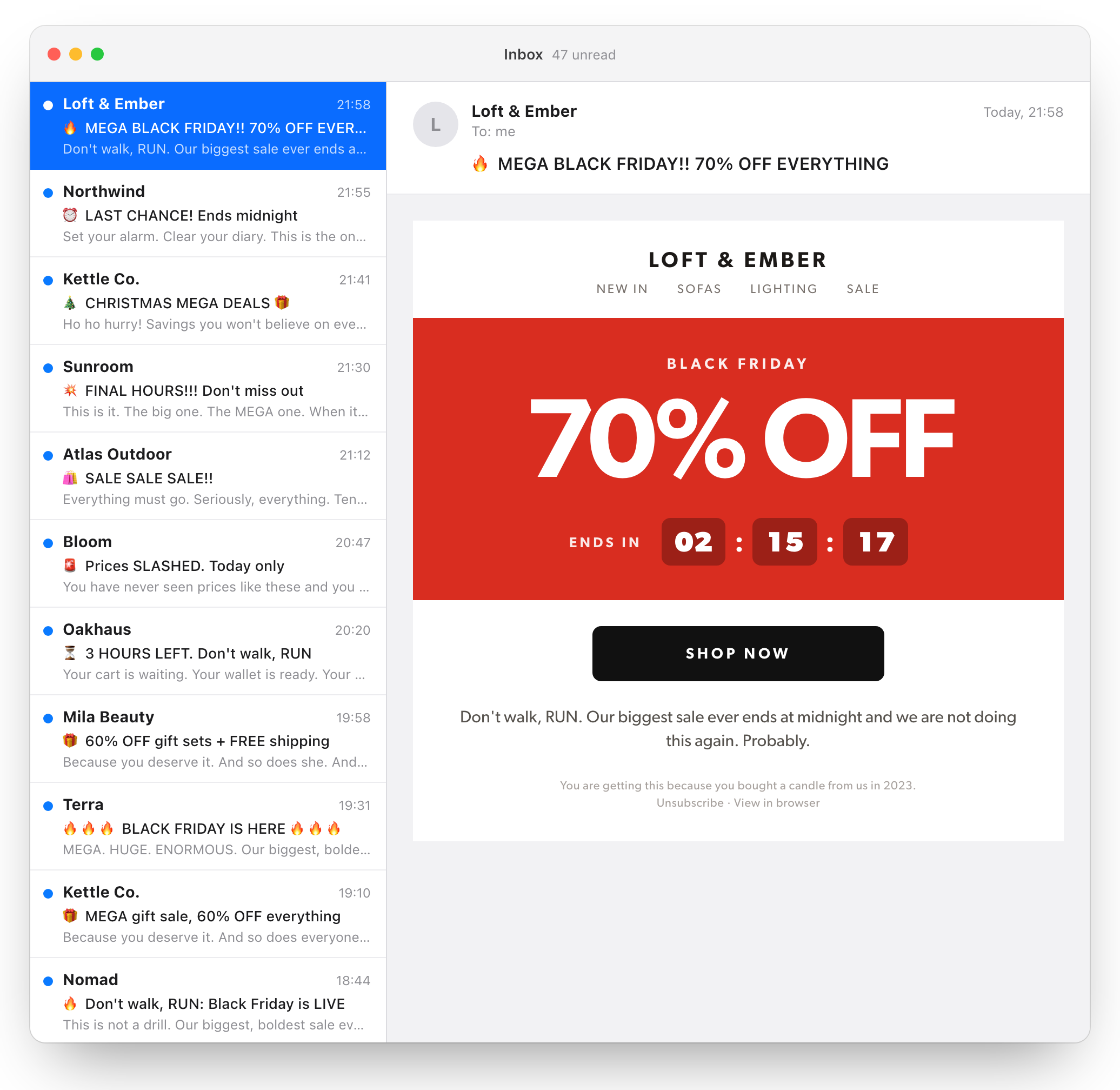
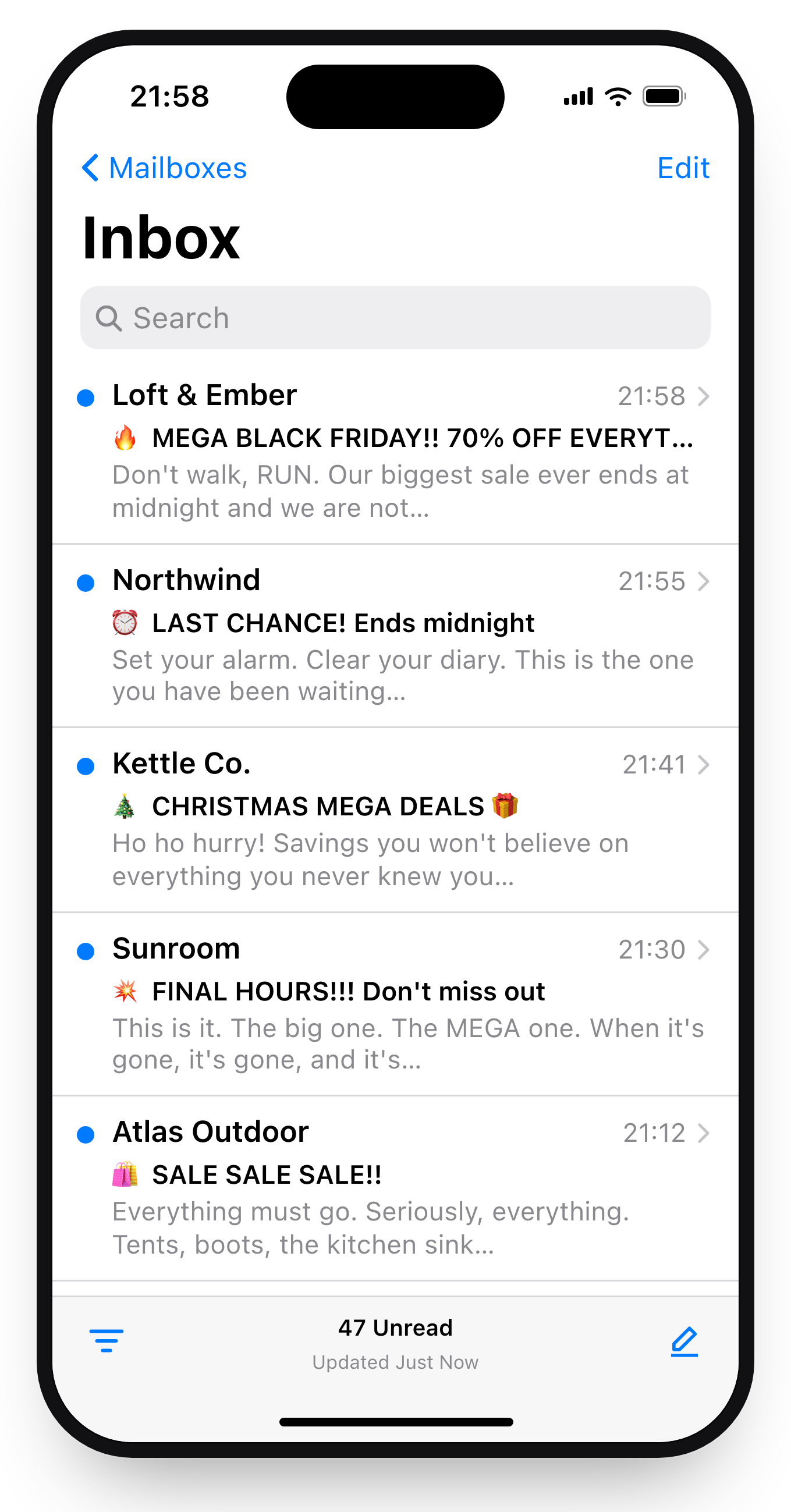
Think about your email inbox in the last week of November.
Go on, picture it. Forty-seven unread. Every subject line has an emoji, a percentage, and the word MEGA in it somewhere. Brands you bought one thing from in 2023 are suddenly writing to you like an old friend with urgent news.
And you know exactly what you do. You select all. You delete. You feel nothing.
Here is the uncomfortable part. Behind every single one of those emails is a team that planned it, designed it, wrote three versions of the subject line, and genuinely hoped it would work.
Silly season is coming. The shouting is about to start. And I want to make a small case for not joining in.
1. The season where everyone shouts at once
If you are outside South Africa, silly season might need explaining. Here, it barely does. It is that stretch from early November to Christmas where the whole country seems to speed up and lose its mind a little, all at the same time. Black Friday kicks it off. The year-end functions blur past. The gifting panic sets in. And then January arrives like a long exhale.
For businesses, these are the biggest spending weeks of the year. So every brand shows up with everything they have. More emails. More ads. More SMSes from numbers you never saved. It makes complete sense from inside each business. This is the moment. Of course you show up loudly.
But now do the maths from the customer's side of the screen.
Their attention did not grow in November. They still have the same one pair of eyes and the same twenty-four hours. The only thing that changed is that a hundred brands decided to reach for that attention in the same three weeks.
When everyone shouts, shouting stops being a strategy. It becomes the entry fee. And the prize for paying it is a spot in an inbox where you are indistinguishable from everyone else who paid it too.
2. Noise is not volume. It is sameness.
Here is the thing I keep coming back to when I watch my own thumb hover over that select-all button.
I am not ignoring those brands because I dislike them. I am ignoring them because I cannot tell them apart.
Every Black Friday email looks like every other Black Friday email. Same countdown timer. Same percentage in the subject line. Same red. My brain stopped reading them individually years ago, the way you stop seeing individual cars in traffic. That is not rudeness. That is pattern recognition. It is the mind protecting itself from a hundred identical requests.
Which means the problem is not that your message was too quiet. It is that your message looked exactly like the noise around it.
And that reframes the whole question. Standing out in silly season is not about doing the same thing louder. Bigger discount, brighter banner, one more send. That is just turning up the volume on a song everyone is already playing.
The first real move is much simpler. Change rooms.
3. The quiet room
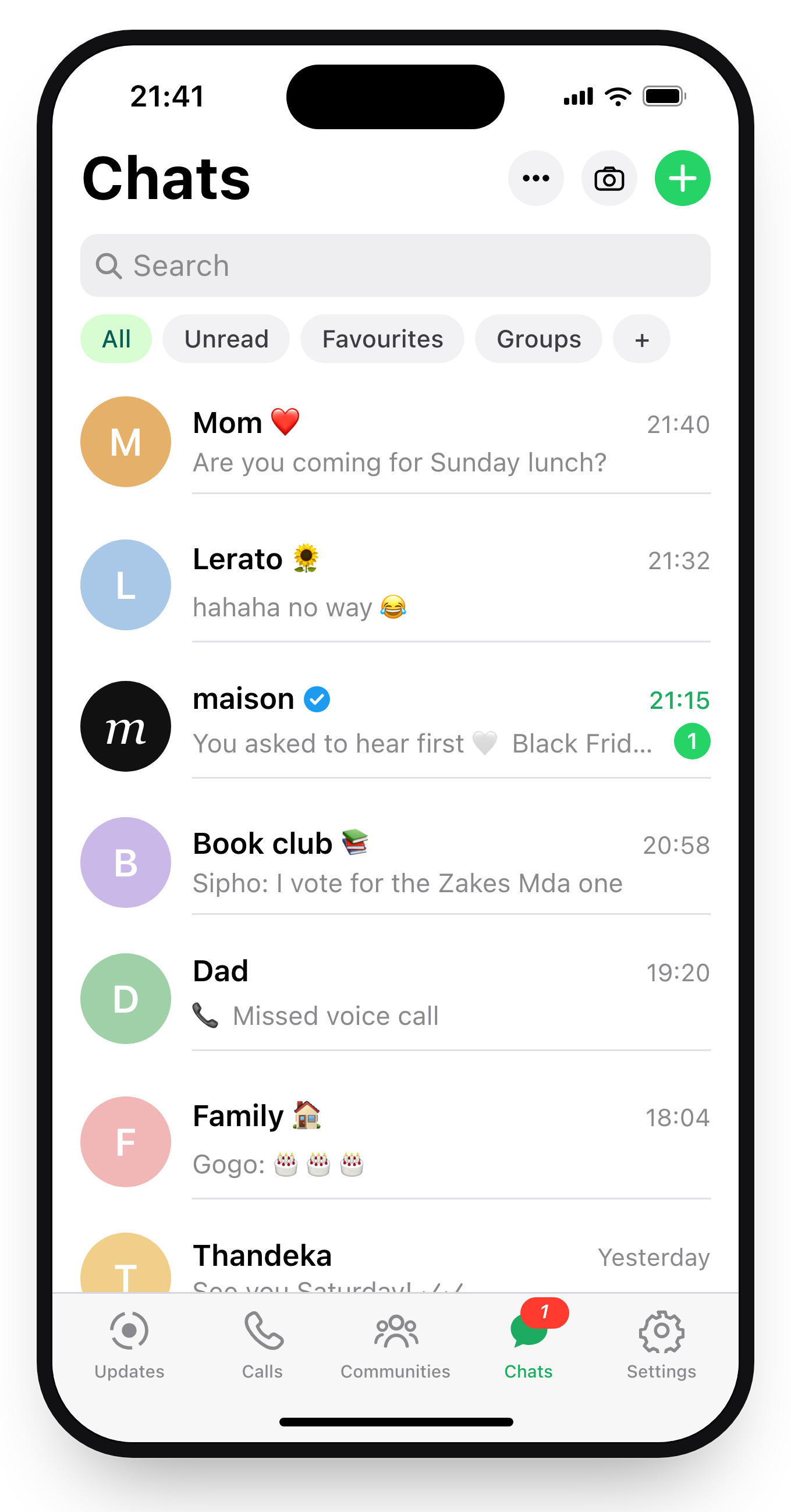
While the email inbox turns into a stampede every November, there is another inbox on the same phone that stays strangely calm.
WhatsApp. The app 96% of South African internet users are on. The one they open before coffee and close last thing at night. The place where the messages actually get read, because the messages are from people they love.
And here is what surprised me when I really looked at it. Almost no brands are in there. The channel with the most attention in the country is the one with the least competition for it. Everyone is fighting over the room your customer avoids, and almost nobody is standing in the room where they live.
Now, before this sounds like an invitation to move the email blast over, it is the opposite.
A message on WhatsApp lands in the same list as their mother and their best friend. That is exactly why it works, and exactly why it has to be treated with respect. This is not the place for seven sends in a week. It is the place for one. One well-timed message, one image, one clear offer, sent to people who chose to hear from you.
Because the same intimacy that makes WhatsApp powerful makes it unforgiving. In email, an ignored message just sits there. On WhatsApp, the mute button is one tap away, and it is permanent. The quiet room stays quiet because the people in it have standards.
Meet the standard, though, and something lovely happens. Your one message gets read in full, by almost everyone, in a season where your competitors are fighting to be the forty-eighth unread email.
4. December is a season of questions
Here is the part that gets forgotten while everyone is busy designing campaigns. Silly season is not really a season of offers. It is a season of questions.
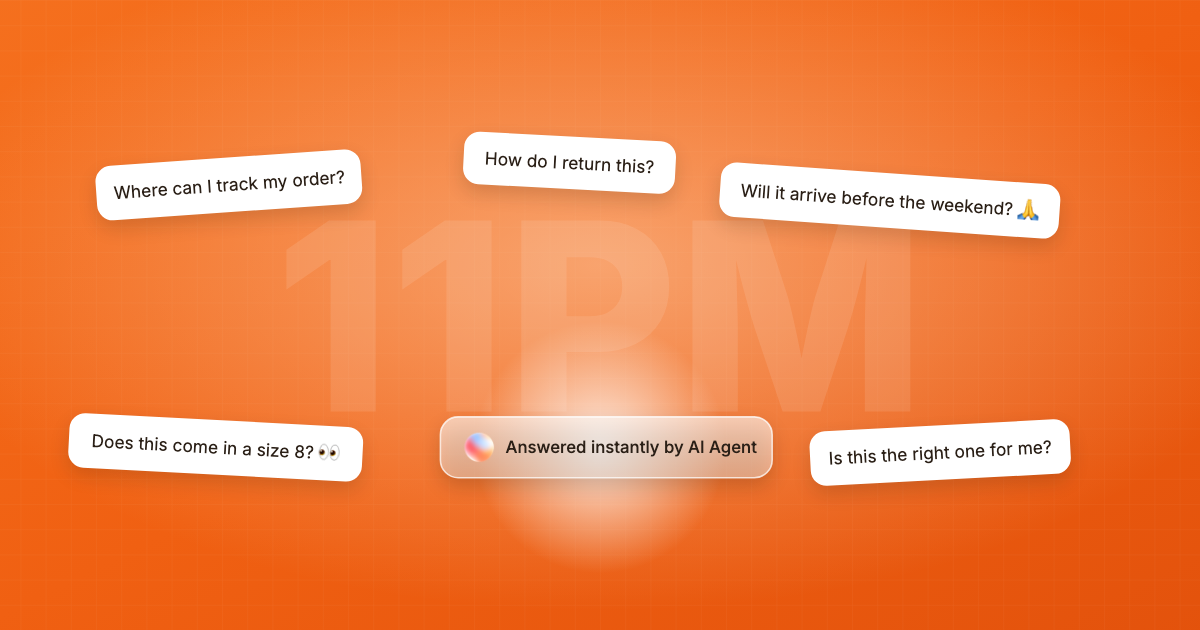
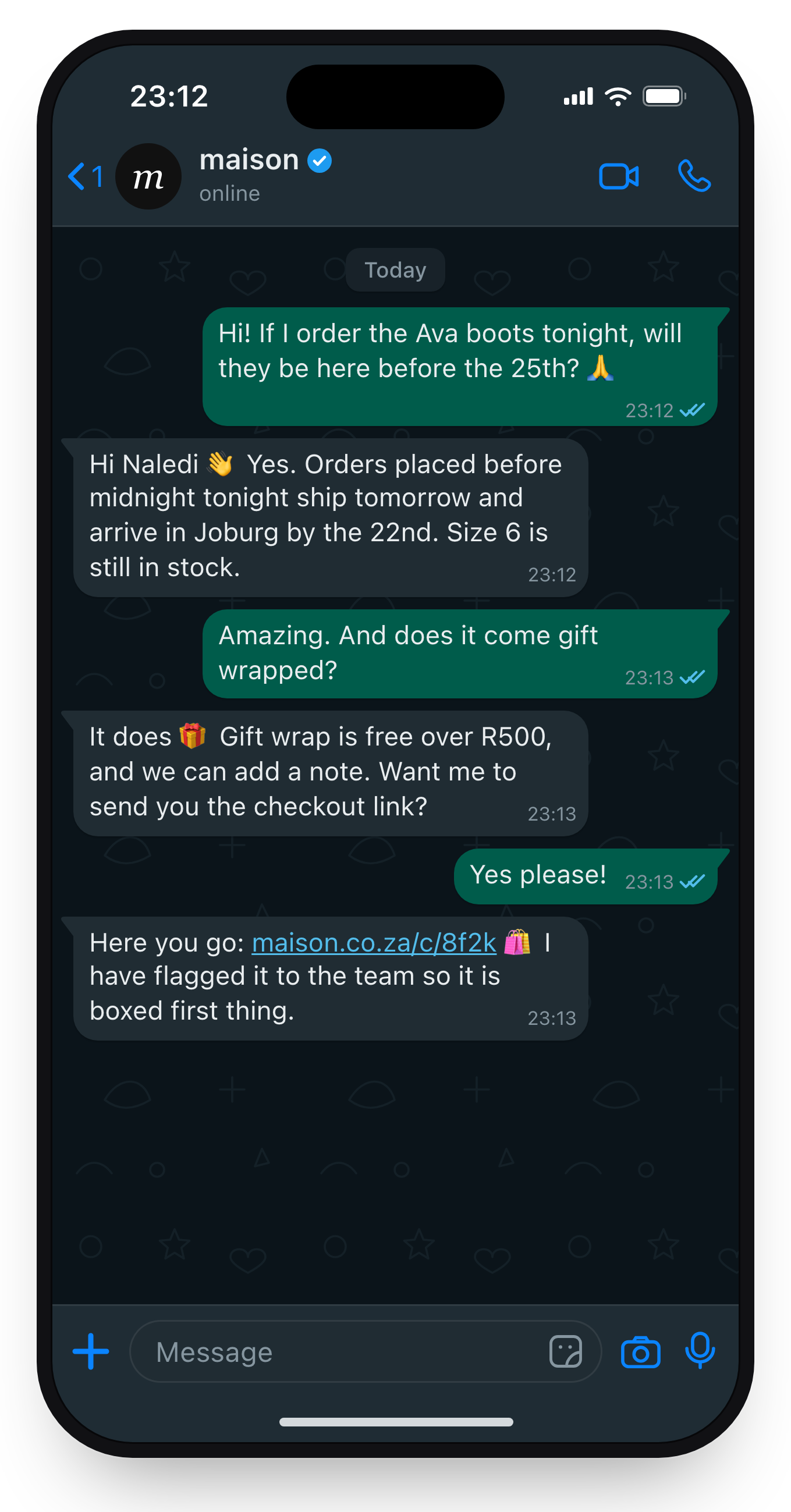
Will it arrive before the 25th? Is the size 8 still in stock? Does it come gift wrapped? Can I return it if he hates it? What do I buy a father who insists he wants nothing?
Every one of those questions is a sale standing at the door, knocking. And they do not arrive during office hours. They arrive at 11pm after the kids are down, in the queue at the shops, in the small panicked gaps of a December day. Across the businesses we work with, 58% of customer messages already land after 5pm or before 9am in a normal month. In December, the stakes on each one go up. An unanswered question in July is a sale delayed. An unanswered question on the 18th of December is a gift bought somewhere else tonight.
And notice the cruel timing. The questions peak in exactly the weeks when support teams are the most stretched, the most tired, and the most likely to be on leave. The highest buying intent of the year meets the slowest replies of the year.
That gap is the real opportunity of silly season. Not a louder ad. A faster answer.
Because the customer asking whether it will arrive in time has already been convinced. Somebody's campaign, maybe yours, maybe a competitor's, already did the expensive part. The brand that simply answers, in the moment, wins the sale that all that shouting paid to create.
5. Silly season is won in September
Now for the twist, and the reason this piece is landing in your feed in spring rather than November.
The best Black Friday move I know of does not happen in Black Friday week. It happens months before. Because the whole quiet-room strategy rests on one thing existing: a list of customers who chose to hear from you on WhatsApp. And you cannot shout your way into a relationship in the last week of November.
That list gets built now. Quietly, one person at a time, while everyone else is still recovering from winter.
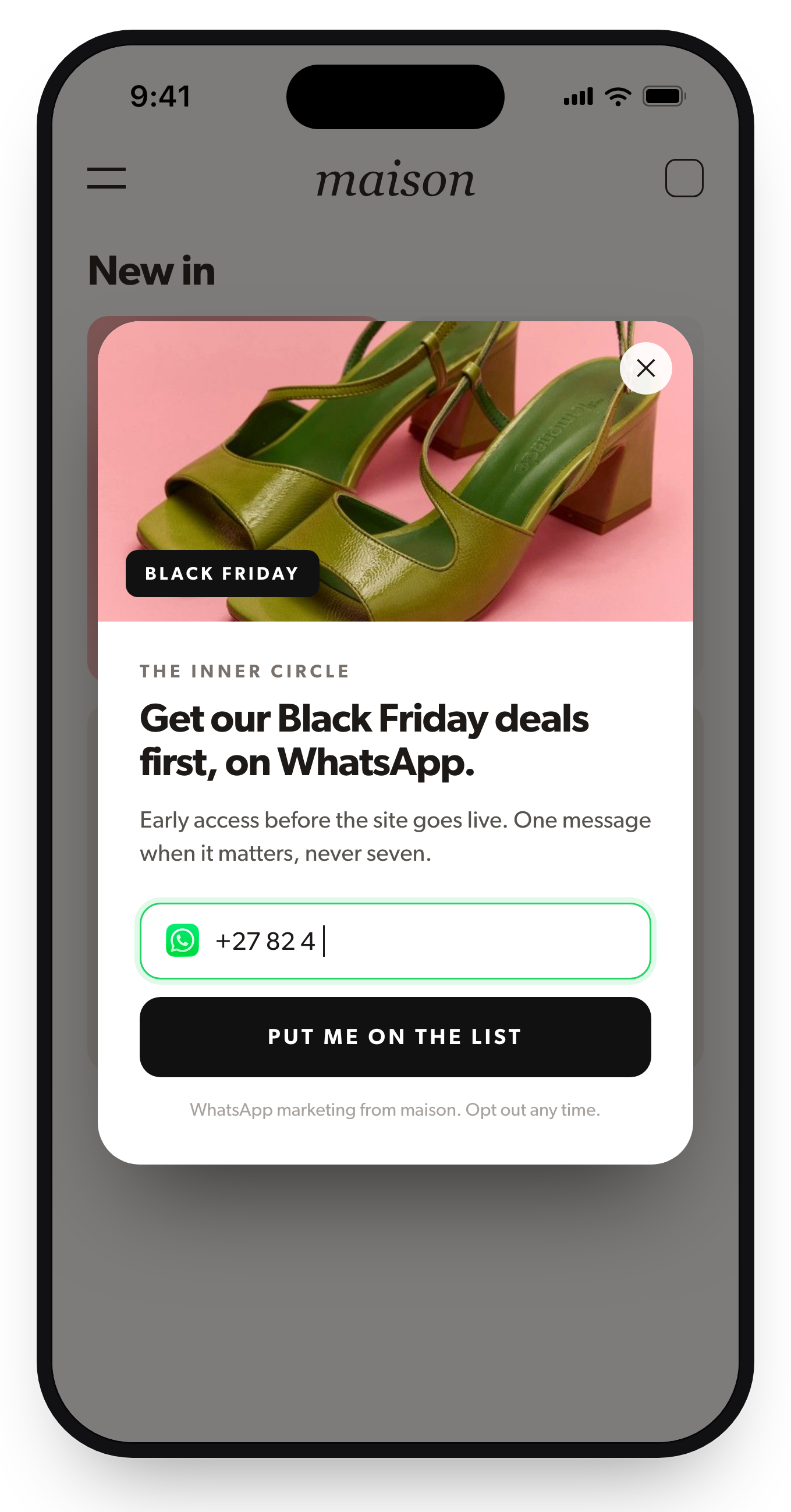
The invitation almost writes itself. Get our Black Friday deals first, on WhatsApp. Join the inner circle. Early access before the site goes live. Put it on the website as your popup. On the till point. In the parcel. In your email footer, doing something useful for once. People say yes to that in September, happily, because early access to a sale they already wanted is a genuinely good trade.
Then, when the madness arrives, your position is completely different. You are not begging an algorithm for reach or fighting the inbox stampede. You are sending one message to a room full of people who asked to be there. Your regulars hear about the loyalty deal. The person who asked about a specific product in October hears the moment it goes on sale. First-time browsers get a gentler nudge than your veterans.
Same season. Same chaos everywhere else. But your channel is calm, warm, and already listening.
6. Send less. Answer more.
So the recipe for standing out this silly season turns out to be almost embarrassingly simple. It just points in the opposite direction to every instinct the season triggers.
Stand in the quiet room instead of the loud one. Send one message worth opening instead of seven that get deleted together. Build the list before you need it. And when the replies and the 11pm questions come, and they will come, make sure someone is home to answer them. A knock on the door is the whole point of knocking.
That last part is where we spend our days at Flowapt. FlowIQ sends the broadcast, but more importantly it answers what comes back. The size question at 11pm. The will-it-arrive-in-time question on the 18th. In your brand's voice, in your customer's language, with a real person stepping in the moment one is needed. While your team sleeps through the busiest night of the year, the door stays open.
The loudest brand does not win silly season. It never did.
The one that answers does.
Key Takeaways
- Silly season is a volume war, and volume wars have no winner. Email traffic multiplies, ad prices climb, and the customer's attention stays exactly the same size.
- Noise is not volume. It is sameness. Deleting fifty brand emails unread is not rudeness, it is pattern recognition. When everything looks the same, everything is invisible.
- The quiet room is sitting right there. While the email inbox turns into a stampede, WhatsApp, the app your customers actually live in, is still almost empty of brands.
- December is made of questions, not just offers. Will it arrive in time? Is it in stock? The brand that answers at 11pm wins the sale another brand's ad paid for.
- Silly season is won in September. The list you message in November has to exist first, and you cannot shout your way into a relationship in the last week of November.
- Send less. Answer more. One good message to people who asked for it, with someone home behind it, beats seven emails into a full inbox.
Frequently Asked Questions
- What is silly season?
- It is the South African name for the stretch from early November to Christmas, when Black Friday, year-end functions, and gift shopping collide. It holds the biggest spending weeks of the year, which is why every brand markets hardest, and loudest, at exactly the same time.
- When should a business start preparing for Black Friday on WhatsApp?
- Months before. The list you message in November has to be built first, one opted-in customer at a time, through your website popup, your till point, your packaging, and your email footer. Start in September and Black Friday week becomes a message to people who asked for it, not a shout at strangers.
- Isn't a WhatsApp broadcast just more noise in a different place?
- Only if you treat it like email. WhatsApp lands beside messages from family, which is why it gets read and why it demands restraint. One well-crafted, well-timed message to people who opted in is the opposite of noise. Seven sends in a week is how you get muted, permanently.
- How many messages should I send during Black Friday week?
- Fewer than you think. One strong message, maybe two if there is genuinely separate news, each with one offer, one image, and one clear action. The restraint is the strategy: it is what separates you from the forty-seven unread emails.
- How do I handle the flood of customer questions in December?
- Not by hand. December questions peak at night and on weekends, exactly when teams are stretched or on leave. An AI agent answers the everyday questions instantly, around the clock, and hands off to a person the moment something needs judgement or empathy.
- What does FlowIQ do during silly season?
- It helps you build the opt-in list before the season, send the one broadcast worth opening during it, and answer every reply and every 11pm question in your brand's voice, with human handoff when it counts. The campaign gets people to knock. FlowIQ makes sure the door opens.
Ready before the noise starts?
The brands that win silly season build the list in September and answer the knock in November. FlowIQ does both: the opt-in, the broadcast worth opening, and an agent answering at 11pm while everyone else is shouting into a full inbox.
Get a free demo- Build your list before November
- One broadcast worth opening
- Every 11pm question answered